Why do so many attorneys refer cases to Hasbrook & Hasbrook?
Here are just a few of the reasons:
- Maximized Compensation Commitment: We are 100 percent committed to getting every penny possible for the injury victims we represent. This means top dollar for the victim and top dollar for you.
- Efficiency and Organization: We are OCD on efficiently practicing law. We’ve invested our time and money in case management software (and other best practices) to stay organized on every case. We know what needs to be done, what tasks or medical records haven’t been received, and the best way to keep the case moving toward resolution. We track the insurance companies we’re going against to know which ones tend to settle pre-suit, which ones make a better offer once the suit has been filed, which ones prefer mediation, and which cases are likely to go to trial.
- Proactive Legal Action: With agreement from the client, we file their lawsuit within 30 days of sending the insurance company a settlement demand. Time is money, and we’re not interested in delaying a case by letting the insurance company play games of “deny, delay, deny, and delay.”
- Financial Support for Case Expenses: We carry the case expenses. As you know, personal injury cases can be expensive to handle and can take a long time to resolve. By referring your case to us, you have nothing to lose and plenty to gain.
- Reputation for Results: Ask around—you’ll find that we have earned a reputation for getting results. Most of our work comes from referrals.
- Ethical Co-Counsel Agreements: We strictly adhere to all ethics rules concerning co-counsel agreements, ensuring a professional and transparent relationship.
- Shared Success: When we achieve success for our clients, it reflects positively on both of us. We aim not just to win cases but also to uphold your good name in the process.
Are you interested in referring a case? Give us a call! If we haven’t met before, give us a call so we can discuss the case over lunch.
Can I be involved in the case after I refer it?
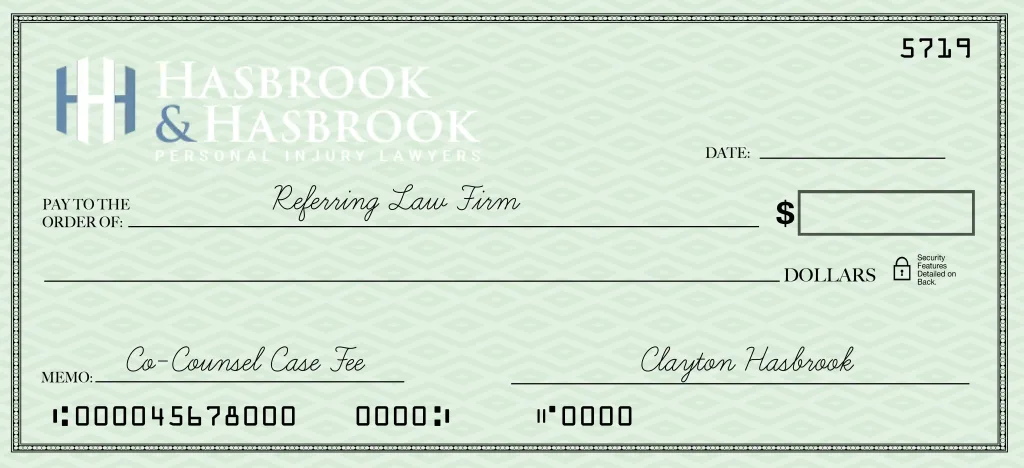
Your level of involvement can be tailored to your preference. Some referring attorneys prefer to stay involved - sharing the workload and case expenses (splitting the fee 50/50), while others leave the case entirely in our hands (typically a 1/3 referral fee).
How quickly do you typically respond to a referral inquiry?
We prioritize referral inquiries and aim to respond immediately, or worst case, within one business day. Our goal is to assess and provide feedback on potential cases as swiftly as possible. If it's not a case we handle, we'll provide you a list of attorneys that handle those types of matters.
Will I be kept informed about the progress of the case?
Absolutely. We believe in maintaining open lines of communication with our referring attorneys. You will be regularly updated on major developments and milestones in the case. We want you to be "up to speed" on the case if the client reaches out to you.